
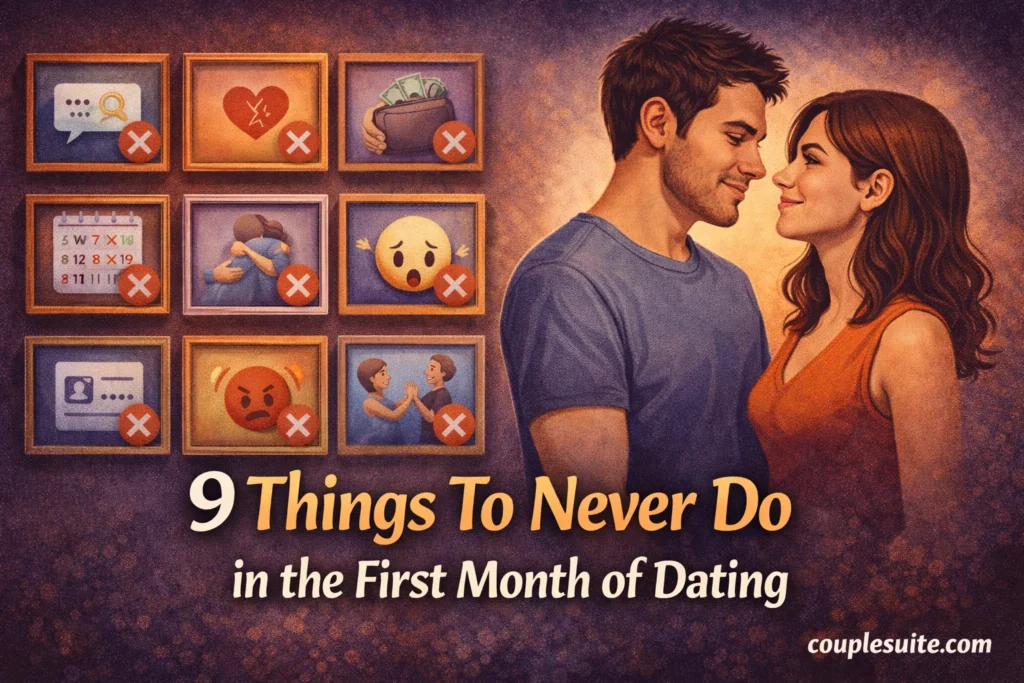
9 Early Dating Mistakes That Quietly Kill a New Relationship
You are three weeks in, the chemistry is undeniable, and you are already mentally rearranging your future. That feeling is real. What you do with it is where things can go sideways.
The first month of dating is the period most people treat like a formality before the real relationship begins. It is not. It is actually when the patterns, expectations, and emotional tone of everything that follows get established, often without either person realizing it is happening. The mistakes made here do not usually announce themselves. They accumulate quietly, and by the time you notice something feels off, you are weeks into a dynamic you built without intending to. Understanding the difference between dating and being in a relationship is part of why this stage deserves its own careful attention.
Here are the nine things that most reliably derail a new relationship before it has had a real chance, and the reason each one tends to backfire even when it comes from a genuinely good place.
Why the First Month Sets Everything That Comes After
Early romantic chemistry is one of the most powerful neurological experiences humans have. The brain in the early stage of attraction floods itself with dopamine, norepinephrine, and serotonin disruptions that can create something close to euphoria. That rush is real, and it is also systematically unreliable as a guide to decision-making.
Psychologists call the most intense version of this state limerence, which describes an involuntary state of obsessive idealization in which the object of your attraction is seen through an almost entirely positive filter. Negative qualities are minimized or overlooked, positive ones are amplified, and the emotional urgency of the situation can make the relationship feel far more established than it actually is. Most early dating mistakes trace back to acting on the feelings of an advanced relationship while still in the information-gathering stage of one.
The first month is not when you build a relationship. It is when you figure out whether the foundation for one exists. Every decision that treats it like something further along than that is working against you.
The 9 Mistakes That Cost People More Than They Expect
1. Saying “I love you” before you genuinely know them. The feeling is real. The question is what it is a feeling about. After one month, what most people are experiencing is intense attraction to a version of someone they have seen in optimal conditions, typically dressed well, trying to make a good impression, and not yet revealing their more difficult qualities. That is not love. Saying it creates immediate pressure on the other person, establishes an emotional imbalance, and often changes the dynamic in ways that are hard to recover from regardless of how they respond.
2. Planning too far into the future together. Talking about a concert three weeks away is one thing. Talking about what city you might eventually live in together is another. When you project a shared future onto a person you have known for a few weeks, you are no longer responding to them. You are responding to a narrative you have started building around them. That distinction matters because the narrative tends to survive longer than accurate information about who the person actually is, which is one reason people end up confused when someone who seemed perfect turns out to be a problem they explained away early.
3. Abandoning your own life. Canceling plans with friends, skipping the gym, letting your own routines collapse to spend more time with someone new does two things simultaneously: it removes the independent version of yourself that likely attracted them in the first place, and it creates a dependency structure at the earliest possible stage. The irony is that becoming less available to your own life does not make you more attractive. Research on attachment styles in adult relationships consistently shows that anxious over-availability is one of the patterns that least supports secure connection. If this tendency feels familiar, understanding your own attachment style can help explain why.
4. Being constantly available. This is a more specific version of the above, but it deserves its own space because it plays out differently. Answering every text within minutes, always being free when they want to meet, building your schedule around their availability sends a signal that they are your highest priority before any real emotional investment has been established on either side. Paradoxically, some degree of natural non-availability, the kind that comes from genuinely having a life, tends to maintain attraction far more effectively than frictionless access.
5. Introducing them to everyone who matters to you. Meeting a sibling for drinks is different from bringing someone to your cousin’s wedding or your parents’ house for Sunday dinner. In the first month, neither of you has agreed on what this is yet. Pulling someone into your family structure before that clarity exists adds a layer of social weight to interactions that are still in the exploratory phase. It also makes a future exit considerably more complicated, which puts subtle pressure on both of you to continue a dynamic that may not be serving either of you.
There is a difference between naturally mentioning someone to people in your life and formally introducing them to people whose opinions will matter to how the relationship develops. The first is normal. The second is a commitment in social terms before you have made it in personal ones.
6. Making purchases or decisions that entangle you. Not a lottery ticket together, not a houseplant, not a weekend booking that requires you to both commit to still being in this in two months. Shared financial or logistical decisions create a structure of obligation around a relationship that has not yet earned that structure. When something becomes complicated to exit, people often stay in it longer than is good for them, and that principle applies even to small entanglements in the early weeks. Keeping early dates simple and low-stakes is one way to avoid this entirely. The date planner has ideas that are fun without requiring either person to overcommit.
7. Oversharing about past relationships. This one is worth examining carefully, because there is a difference between being honest about your history and performing a debrief on every significant person who came before. Bringing up exes repeatedly, especially critically, gives a new partner information they cannot yet contextualize, signals that you may not be fully done processing whatever came before, and centers other people in a relationship that is just getting started. Share what is relevant when it becomes relevant. Your full history can emerge gradually, the way it does in relationships that last.
8. Ignoring red flags because the rest feels good. The early weeks of dating are the period when behavioral patterns are actually most visible, because people are not yet fully relaxed into their habits and the things that slip through the performance are genuinely revealing. A comment about an ex that strikes a note, a reaction to a small inconvenience that seems disproportionate, a pattern of cancellation or inconsistency that you are currently explaining away: these are not random. They are information. According to Psychology Today’s coverage of early relationship idealization, the neurological state of early attraction actively suppresses accurate threat assessment, which means the red flags you are ignoring now are the ones you will be most likely to miss until they become much harder to address. If a pattern looks like love bombing, it is worth understanding what that actually looks like before you explain it away as enthusiasm.
9. Pressuring them to define the relationship. This is usually driven by anxiety rather than actual readiness, and the other person can feel that. Wanting clarity before you have established enough shared experience for that clarity to be meaningful forces a label onto something that is still forming. That label then shapes the relationship whether it fits or not. The conversations about what you are and what you both want matter enormously, but they land differently when they come from a place of genuine readiness than when they come from the need to reduce uncertainty. One invites honesty. The other creates performance.
What the First Month Is Actually For
The most useful reframe for the early weeks of dating is this: your job is not to secure the relationship. It is to learn whether a relationship is worth securing. That means staying curious rather than confirmatory, paying attention to how you feel around this person rather than how you feel about them in their absence, and maintaining enough of your own life that you are still recognizable to yourself.
The first month that goes well is one where both people show up to interactions with something to bring: experiences, thoughts, energy from their own lives. Where conversations feel like discovery rather than audition. Where neither person is performing a version of themselves they cannot sustain. The patterns established in those early weeks tend to persist. The ones built on anxiety or performed rather than genuine tend to become harder to sustain over time, not easier.
The things worth doing in this period are simpler than the things worth avoiding: be genuinely present when you are with them, be genuinely yourself rather than a curated version, and keep enough of your actual life intact that you are bringing something to the relationship rather than expecting it to provide everything. That combination tends to be more attractive and more sustainable than anything you can engineer. If you want to deepen connection during this period without overstepping, good questions tend to create more genuine closeness than grand gestures. Low-key games like this or that or have you ever give you both something fun to do while actually learning about each other, which is exactly what the first month is for.
Frequently Asked Questions
The first month of dating is a short window with a disproportionate effect on everything that comes after. Which of these nine mistakes are you most likely to make, and do you know why?