
If you are searching for signs the relationship is over for him, you are likely sensing a shift that feels hard to explain. Relationships rarely end in a single moment. They fade through patterns of emotional withdrawal, reduced effort, and loss of connection.
Understanding these signals helps you separate temporary stress from true emotional disengagement. This guide breaks down clear behavioral and psychological signs, why they happen, and what they mean for your future.
Why It Can Be Hard to Tell When a Man Is Emotionally Done
Recognizing relationship decline is confusing because not every distance means the end. Life stress, work pressure, and personal struggles can temporarily change behavior.
However, consistent patterns of emotional detachment often indicate deeper issues.
Emotional Withdrawal vs Temporary Stress
Temporary stress usually comes with reassurance. Even if he is busy or overwhelmed, he still checks in emotionally.
When the relationship is ending, emotional distance becomes persistent. Conversations feel empty, and the sense of connection fades over time.
The Psychology Behind Pulling Away
Men often process emotions internally, which can look like silence or avoidance. Emotional burnout, unresolved conflict, or feeling disconnected can lead to gradual withdrawal.
In many cases, an avoidant attachment style can amplify this behavior, making communication even harder.
The Clearest Signs the Relationship Is Over for Him
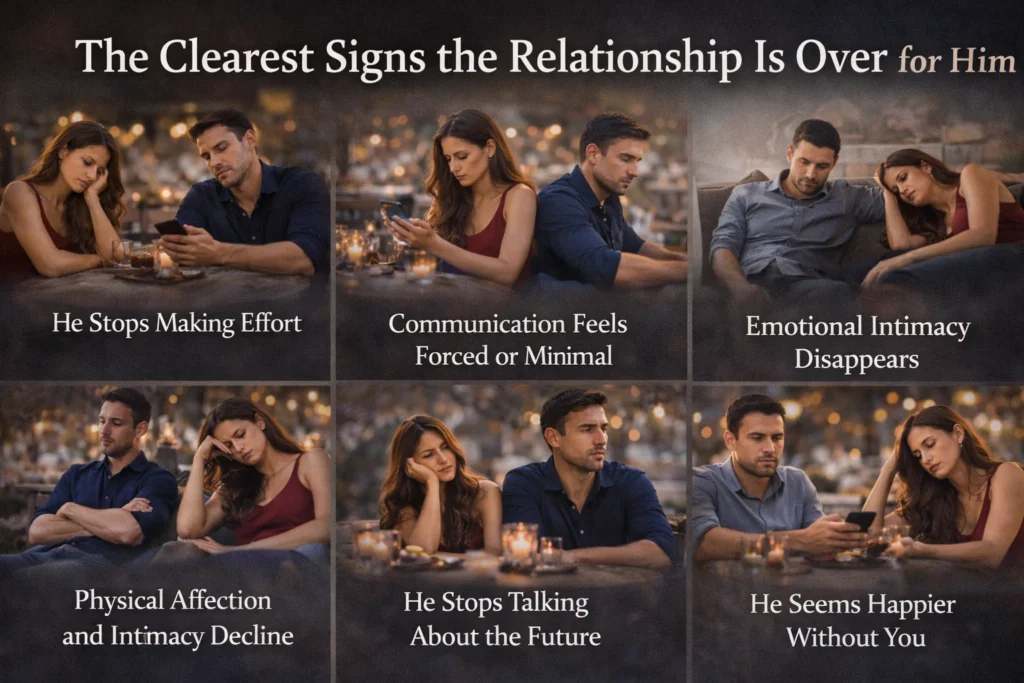
The most reliable indicators come from patterns, not isolated moments. Below are the most common behavioral signs that signal emotional disengagement.
He Stops Making Effort
Effort is one of the strongest indicators of relationship investment. When a man stops initiating plans or checking in, it often reflects reduced emotional involvement.
Lack of effort may appear as cancelled plans, minimal interest in your day, or no attempt to spend quality time together.
Communication Feels Forced or Minimal
When communication breakdown begins, conversations become transactional rather than meaningful.
Short replies, long response times, and avoiding deeper topics often signal that he is emotionally checked out.
Emotional Intimacy Disappears
Emotional intimacy is built through vulnerability and support. When it fades, the relationship starts to feel distant even if you still spend time together.
You may notice he no longer shares feelings, dreams, or concerns.
Physical Affection and Intimacy Decline
Reduced touch, fewer hugs, and lack of closeness often reflect emotional disconnection.
While intimacy naturally fluctuates, consistent decline paired with other signs can indicate loss of attraction or emotional withdrawal.
He Stops Talking About the Future
Future plans reflect commitment. When he avoids conversations about goals, trips, or long term vision, it often means he no longer sees the relationship as permanent.
He Seems Happier Without You
This sign can be subtle. If he appears more relaxed, energized, or engaged when you are not around, it may reflect emotional detachment.
Conflict Turns Into Indifference
Healthy relationships involve disagreements. But when arguments turn into indifference instead of resolution, emotional investment is often gone.
Indifference is a stronger sign of disengagement than conflict itself.
Subtle Signs Many People Miss

Some signs are less obvious but equally important.
He Avoids Deep Conversations
Conversations stay surface level. Topics about emotions or relationship growth feel uncomfortable or are quickly changed.
He Is Mentally Present but Emotionally Absent
You may spend time together, yet still feel alone. Emotional presence matters more than physical proximity.
He Stops Sharing His Life With You
When someone stops talking about their daily experiences, goals, or thoughts, it signals emotional distancing.
You Feel Like Roommates Instead of Partners
The relationship may feel routine rather than connected, with minimal emotional warmth.
Modern Signs in Today’s Digital Relationships
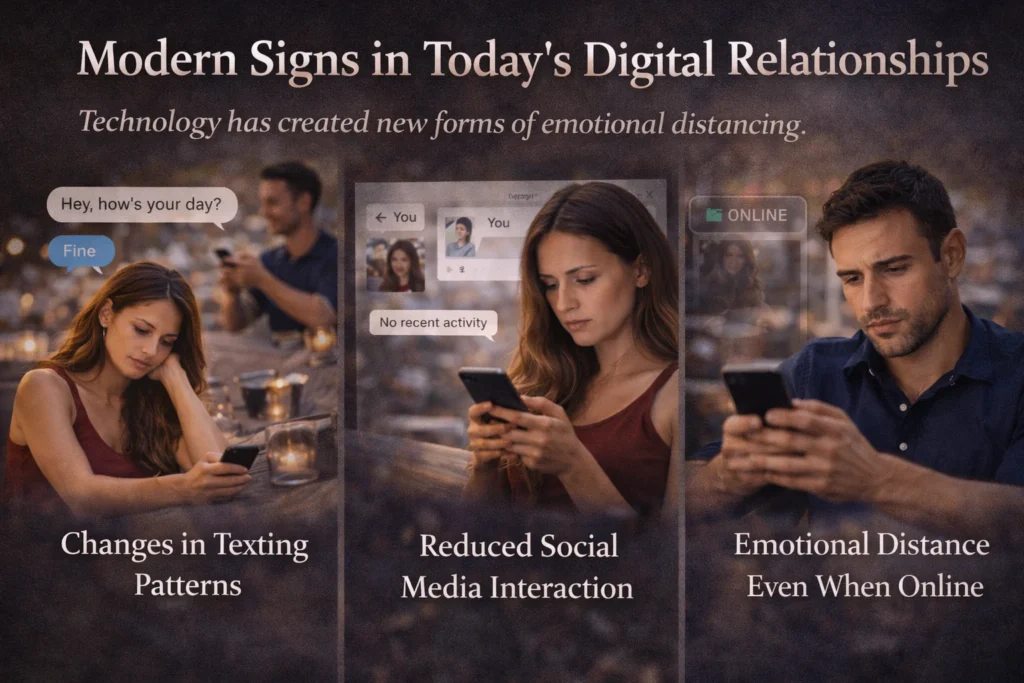
Technology has created new forms of emotional distancing.
Changes in Texting Patterns
Delayed replies, shorter messages, or lack of enthusiasm can indicate reduced emotional investment.
Reduced Social Media Interaction
Less engagement with your posts or shared content may reflect emotional withdrawal.
Emotional Distance Even When Online
Being constantly online but not communicating with you can feel confusing and often signals disengagement.
Temporary Rough Patch vs Relationship Ending
Distinguishing between a rough phase and the end is essential.
Signs It Is a Temporary Phase
There is still care, reassurance, and willingness to communicate. Stress factors are external rather than relationship based.
Signs It Is Likely the End
Disengagement becomes consistent. He shows little interest in repairing the connection or addressing concerns.
Why Men Emotionally Check Out of Relationships
Understanding the reasons behind withdrawal provides clarity.
Unresolved Conflict
Repeated arguments without resolution can lead to emotional exhaustion.
Feeling Unappreciated
When effort goes unnoticed, motivation declines over time.
Emotional Burnout
Constant tension or pressure can make someone withdraw to protect themselves emotionally.
Loss of Attraction
Attraction involves emotional, mental, and physical components. When these weaken, connection fades.
Sometimes emotional withdrawal is closely connected to a gradual decline in attraction rather than a sudden decision. Recognizing the behavioral and emotional signs of fading attraction can provide deeper clarity about what is happening beneath the surface.
👉 For a deeper look at attraction changes, read Signs My Husband Not Attracted Me.
Compatibility Issues
Differences in values, goals, or communication styles may gradually create distance.
How This Feels From Your Side
When a relationship is ending emotionally, the experience often feels confusing.
Feeling Confused by Mixed Signals
He may still show occasional warmth, creating uncertainty about his true feelings.
Confusion often happens when affection appears intense at times and distant at others. Understanding whether those shifts reflect genuine feelings or unhealthy patterns can help you interpret the situation more clearly.
👉 You can explore this further in Love Bombing Examples and Warning Signs.
Walking on Emotional Eggshells
You may avoid topics or actions to prevent conflict.
Intuition Telling You Something Is Off
Often your instincts notice emotional distance before you can explain it logically.
When to Talk vs When to Let Go
Knowing the right moment to communicate can provide closure or clarity.
Signs a Conversation Can Help
He still shows willingness to listen and discuss issues calmly.
Signs He Has Already Made His Decision
He avoids conversations entirely or responds with indifference.
How to Approach the Conversation Calmly
Focus on expressing feelings rather than assigning blame. Clear communication creates space for honesty.
What Not to Do When You Notice These Signs
Your response can shape how the situation unfolds.
Avoid Chasing or Overexplaining
Pursuing someone emotionally withdrawn often increases distance.
Do Not Ignore Your Needs
Your emotional wellbeing matters. Ignoring discomfort prolongs confusion.
Stop Trying to Force Emotional Connection
Connection must be mutual. Effort from one side alone cannot sustain a relationship.
If the Relationship Is Ending, What Comes Next
Endings bring emotional adjustment, but they also create space for growth.
Coping With Emotional Detachment
Allow yourself to process feelings without rushing decisions.
Rebuilding Self Worth
Focus on activities, relationships, and goals that reinforce your sense of identity.
Moving Forward Without Regret
Closure comes from understanding the experience rather than blaming yourself.
Healthy Relationship Comparison
Understanding what a healthy connection looks like provides clarity.
Signs a Relationship Still Has Life
Mutual effort, emotional support, and shared goals indicate ongoing connection.
Sometimes reconnecting starts with simple conversations that bring curiosity and playfulness back into the relationship. Lighthearted questions can help partners rediscover emotional closeness in a relaxed way.
👉 Try the Have You Ever Couples Game to spark open and meaningful conversations.
Signs Emotional Investment Is Mutual
Both partners show care, listen, and prioritize each other consistently.
Quick Self Assessment Checklist
Use this table to reflect on your relationship patterns.
| Question | Yes or No |
|---|---|
| Do you feel emotionally supported | |
| Does he make consistent effort | |
| Are conversations meaningful | |
| Do you feel secure in the relationship | |
| Is there mutual respect and connection |
Multiple negative answers may indicate deeper issues.
The Truth About Knowing When It Is Over
Relationships often end emotionally before they end officially. Recognizing this allows you to respond with clarity instead of confusion.
You deserve mutual effort, emotional presence, and respect. When those elements disappear consistently, it may be time to reassess the future.
Conclusion: Clarity Leads to Emotional Freedom
Recognizing signs the relationship is over for him is not about assigning blame. It is about understanding emotional patterns and protecting your wellbeing.
When effort fades, communication breaks down, and connection disappears, the relationship may no longer be meeting your needs. Acknowledging this truth allows you to move forward with confidence and self respect.
Sometimes the most empowering step is accepting what you already feel. Emotional clarity creates space for healthier relationships and deeper fulfillment.
🌸 Frequently Asked Questions
They may continue the relationship out of comfort while avoiding emotional depth or long term planning.
Not always. Some signs are subtle, such as reduced emotional sharing or decreased enthusiasm.
It often develops gradually, but major life events can accelerate the process.
Comfort, fear of change, or uncertainty about the future can delay decisions.
Not necessarily. If both partners address underlying issues, connection can sometimes be rebuilt.
Focus on strengthening your support system, maintaining routines, and prioritizing self care.
Interest can fluctuate with circumstances, while loss of love usually involves deeper emotional disengagement.