

Budget Travel Tips for Couples
Traveling as a couple on a budget doesn’t mean choosing between a real vacation and an empty bank account — it means being deliberate about where the money actually goes. A well-planned budget trip can feel just as memorable as an expensive one, sometimes more so, because you’re forced to find the things that matter instead of defaulting to whatever’s most convenient.
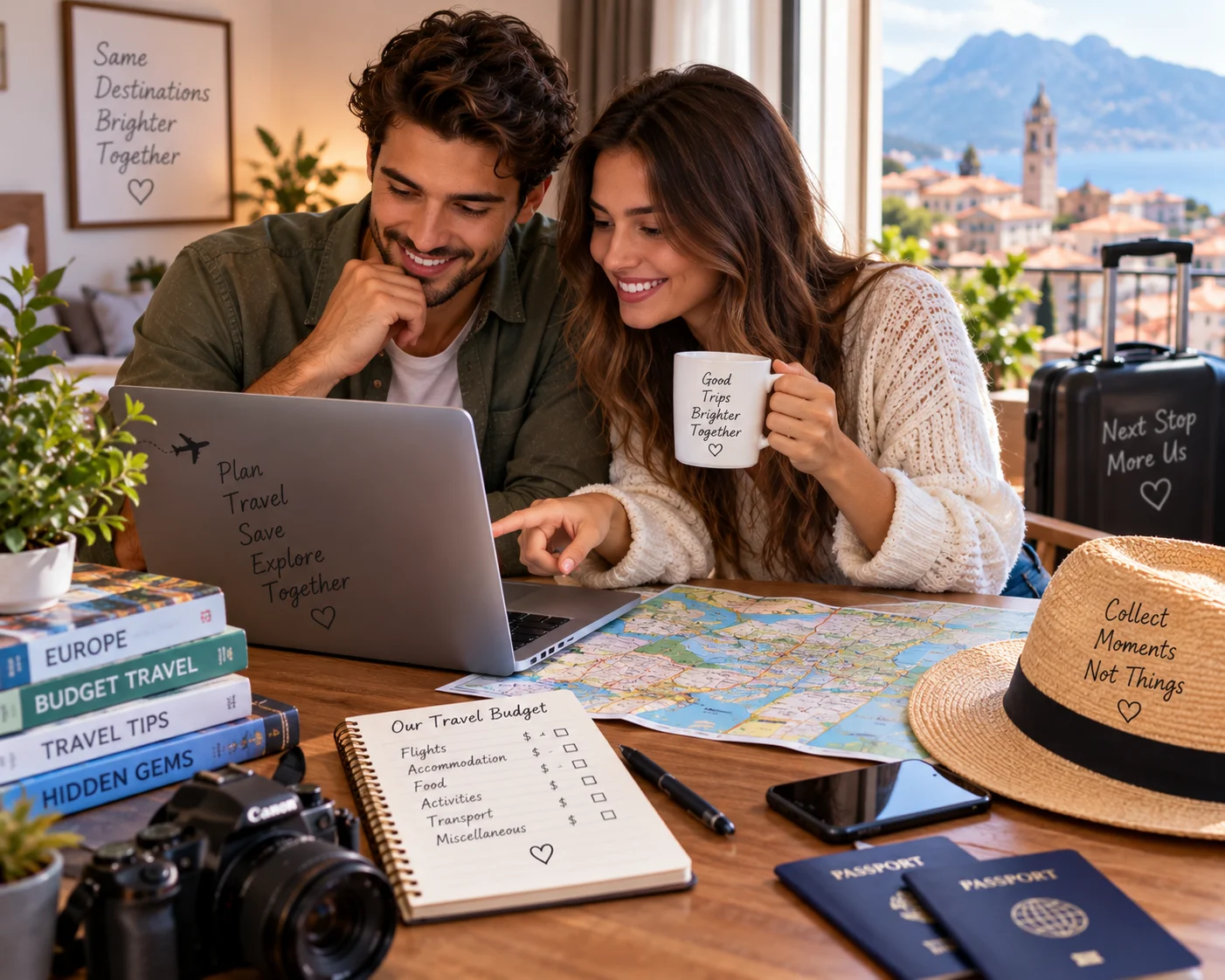 Budget travel works best when it’s planned on purpose, not scraped together at the last minute.
The trips couples remember fondly years later are rarely the most expensive ones. They’re the ones with a good story attached — the hostel with the surprisingly great rooftop, the street food that beat every restaurant on the trip, the free walking tour that turned into an afternoon. Budget travel, done well, tends to produce more of exactly that.
Setting a Realistic Travel Budget Together
Every budget trip starts with the same conversation, and it’s one couples too often skip: what are we actually willing to spend, and where. Vague intentions like “let’s keep it cheap” tend to fall apart the moment one partner wants to splurge on a nice dinner and the other’s still thinking in hostel-dorm terms.
- Agree on a total trip budget before looking at flights or accommodation
- Decide together which one or two things are worth spending more on — food, one nice hotel night, a specific activity
- Set a rough daily spending target so you’re not doing the math anxiously every evening
- Build in a small buffer for the inevitable unplanned expense
Tracking spending as you go, rather than adding it all up in horror at the end, makes a real difference to how relaxed the trip actually feels. CoupleSuite’s Couple Expense Tracker is built for exactly this — a simple, shared way to see where the money’s going without either partner keeping score alone.
A budget isn’t a restriction on the trip — it’s what lets you enjoy the trip without a nagging feeling in the back of your mind that you’re overspending.
Choosing Budget-Friendly Destinations
Some destinations simply stretch further than others, and picking one of them is often the single biggest lever for a budget trip. Southeast Asia — Vietnam, Thailand, and Cambodia in particular — remains one of the most reliable regions for couples wanting a lot of experience for relatively little money. Eastern Europe, including Poland, Hungary, and Portugal within Western Europe, offers a similar value gap compared to pricier neighbors like France or Switzerland. Closer to home, smaller cities and off-season coastal towns often deliver a comparable experience to their famous, expensive counterparts at a fraction of the cost.
Popular destination, off-season
Visiting a well-known spot outside peak months. Same location, thinner crowds, noticeably lower prices on flights and hotels.
Lesser-known destination
A nearby but less-hyped alternative to a famous city or beach. Often just as beautiful, without the inflated tourist pricing.
Timing Your Trip to Save Money
When you travel often matters more than where, at least in terms of cost. Shoulder season — the weeks just before or after peak tourist months — tends to offer noticeably lower prices on flights and accommodation, along with smaller crowds at the sights you actually came to see.
Booking flights on flexible date searches rather than fixed weekend trips can also open up meaningfully cheaper options, especially for couples without strict work schedules pinning them to specific days.
Affordable Accommodation Options for Couples
Accommodation is usually the biggest line item after flights, and it’s also where couples have the most room to get creative without sacrificing much comfort.
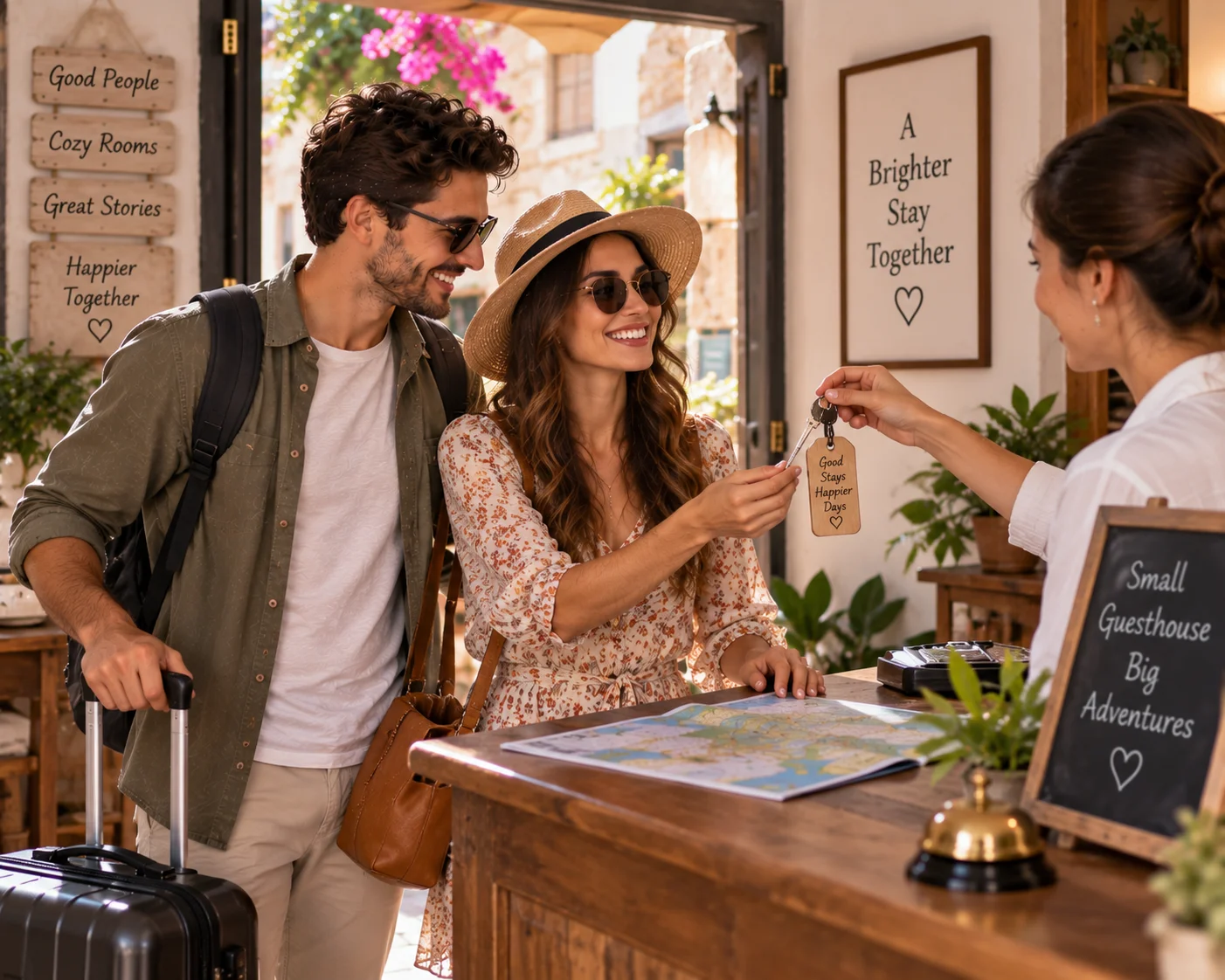
Guesthouses over chain hotels
Often cheaper and more personal, with hosts who can point you toward better, less touristy food than any guidebook.

Private hostel rooms
Many hostels offer private couple rooms at a fraction of hotel prices, without giving up much privacy.

Short-term apartment rentals
A kitchen means fewer restaurant meals, which adds up fast over a longer trip.
Eating Well Without Overspending
Food is one of the best parts of any trip, and it doesn’t have to be where the budget quietly disappears. A few habits keep meals both affordable and genuinely enjoyable.
- Eat where locals actually eat — often cheaper and better than restaurants aimed at tourists
- Treat street food and markets as real meals, not just snacks between “proper” dinners
- Pick one or two splurge meals for the trip instead of spreading a bigger budget thin across every dinner
- Grab breakfast items from a grocery store rather than paying hotel or café prices every morning
Splitting meals is also a genuinely underused budget move for couples — many restaurant portions abroad are generous enough that sharing a couple of dishes covers both people comfortably.
Free and Low-Cost Activities Worth Prioritizing
Some of the best travel experiences cost nothing at all, and prioritizing them frees up the budget for the few paid activities that genuinely matter to you.
Getting Around Without Overspending
Transport costs can quietly eat a big chunk of a travel budget, especially in cities where taxis and rideshares feel like the default option.
- Use public transit where it’s reliable — often faster than expected and far cheaper than cabs
- Walk when a destination is realistically walkable; it’s free and usually reveals more of a place
- Book longer-distance transport, like trains or buses, in advance for meaningfully lower fares
- Consider a multi-day transit pass if you’re planning to move around a city frequently
Slower travel — trains instead of flights for shorter regional distances, walking instead of taxis — tends to be both cheaper and more memorable than the fastest option available.
Making Budget Trips Feel Special, Not Just Cheap
A lower budget doesn’t have to mean a lower-quality experience. The trick is being intentional about which moments get the extra effort or expense, rather than spreading a thin budget evenly across everything.
If you and your partner disagree on where that splurge should go — the nicer dinner versus the paid activity — it’s worth deciding together rather than one person quietly picking. CoupleSuite’s Couple’s Decision Helper can settle that kind of trade-off without either of you feeling shortchanged.
Couples often remember the free walking tour or the local market meal more vividly than the expensive restaurant they’d originally planned around.
A pattern frequently noted in budget travel writing
Budget travel for couples isn’t about cutting corners everywhere — it’s about spending deliberately on the few things that matter and finding genuinely free or low-cost value everywhere else.
Planning Your Own Budget Trip
None of this requires a spreadsheet obsession or giving up comfort entirely. Start with a number you’re both comfortable with, pick a destination and season that stretches it further, and decide together where the one or two splurges will go. Budget travel tips for couples come down to the same basic idea again and again: spend with intention, not by default, and the trip ends up feeling generous even when the numbers weren’t.