
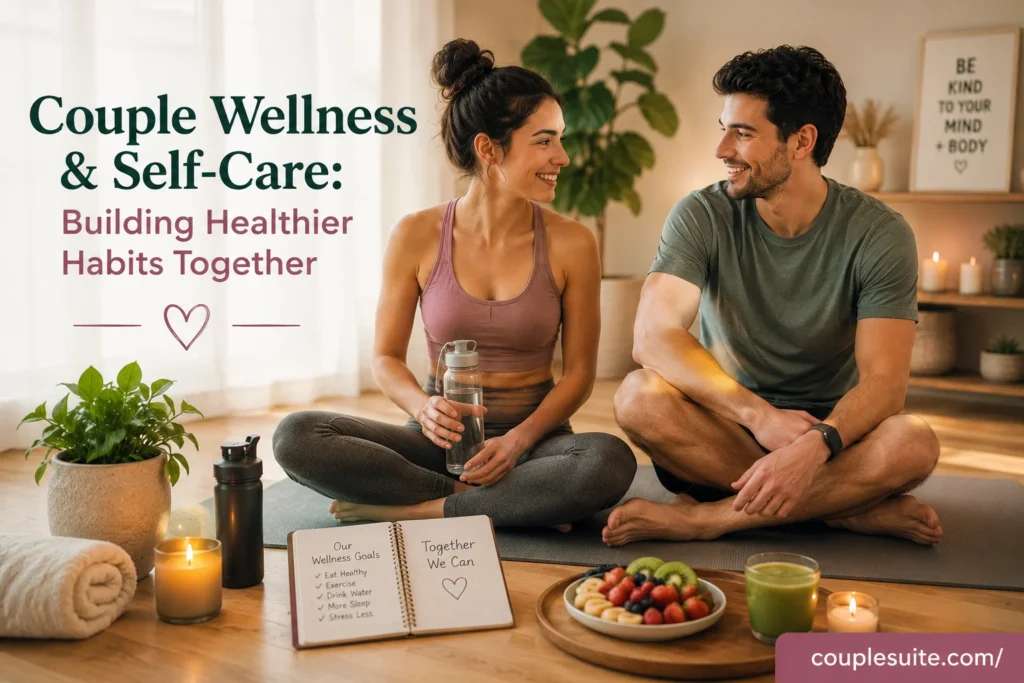
Couple Wellness & Self-Care: Building Healthier Habits Together
Self-care usually gets framed as a solo activity — a bath, a journal, an hour with the phone on silent. But a lot of it works just as well, sometimes better, when it’s shared. Couple wellness isn’t about turning your relationship into a routine of green juice and 6am alarms. It’s about finding a handful of habits that make both of you feel steadier, and doing them together often enough that they actually stick.
 Wellness as a couple often looks less like a workout and more like ten quiet minutes you protect on purpose.
Relationships absorb stress the same way individuals do — badly, if nothing’s in place to release it. The couples who seem to handle busy stretches without snapping at each other over dishes usually aren’t calmer people by nature. They’ve just built small, repeatable habits that give the relationship somewhere to exhale. None of what follows requires a big lifestyle overhaul. It’s mostly about carving out small pockets of intentional time and treating them as non-negotiable.
Self-Care Ideas for Couples
Shared self-care works differently than solo self-care — instead of retreating from each other to recharge, you’re recharging side by side. That distinction matters, because it turns rest into something you associate with your partner rather than something you do to escape them.
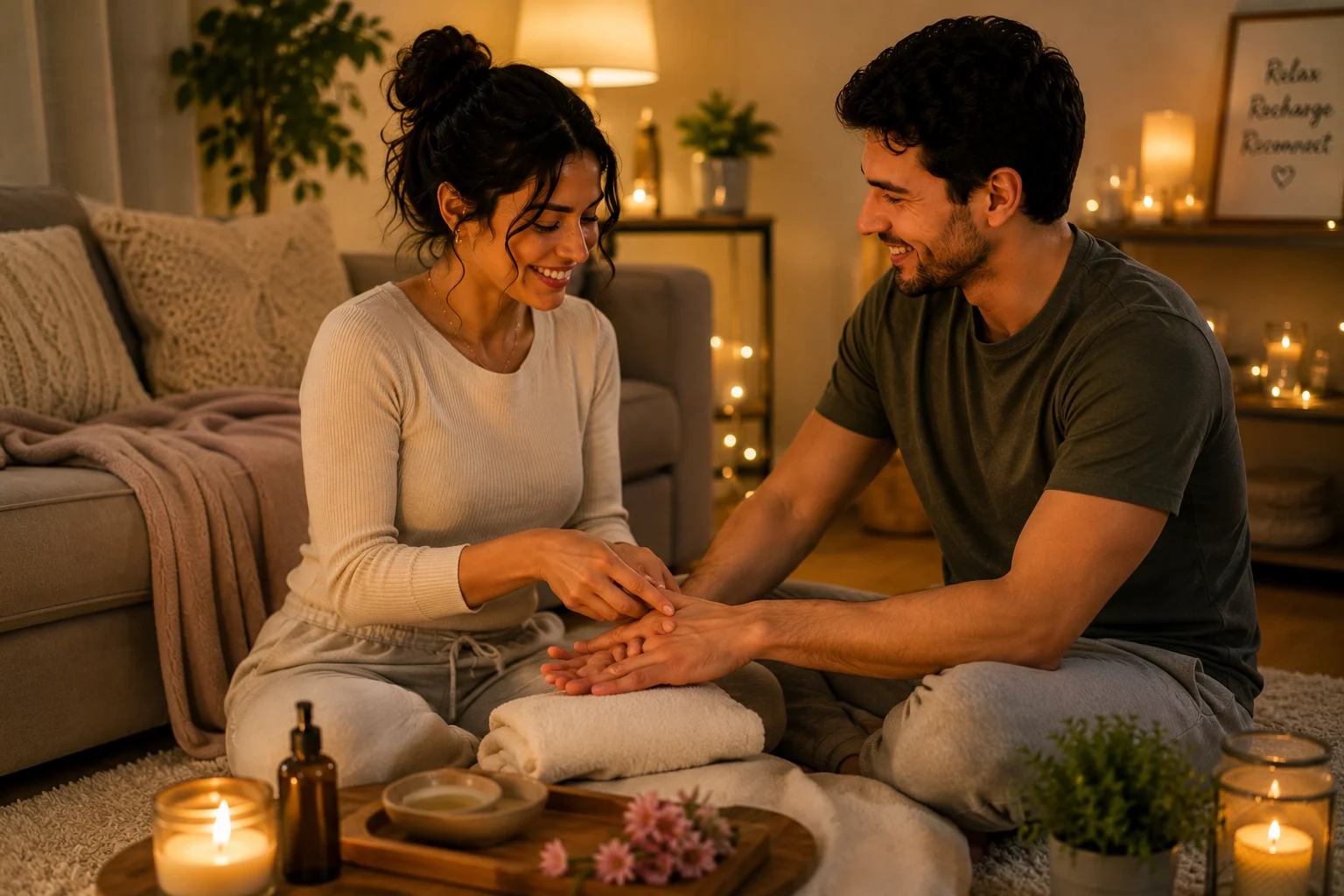
Trade short massages
Ten minutes each, hands or shoulders, no expectation of it turning into anything else. It’s a small physical reset that also just feels like being taken care of.
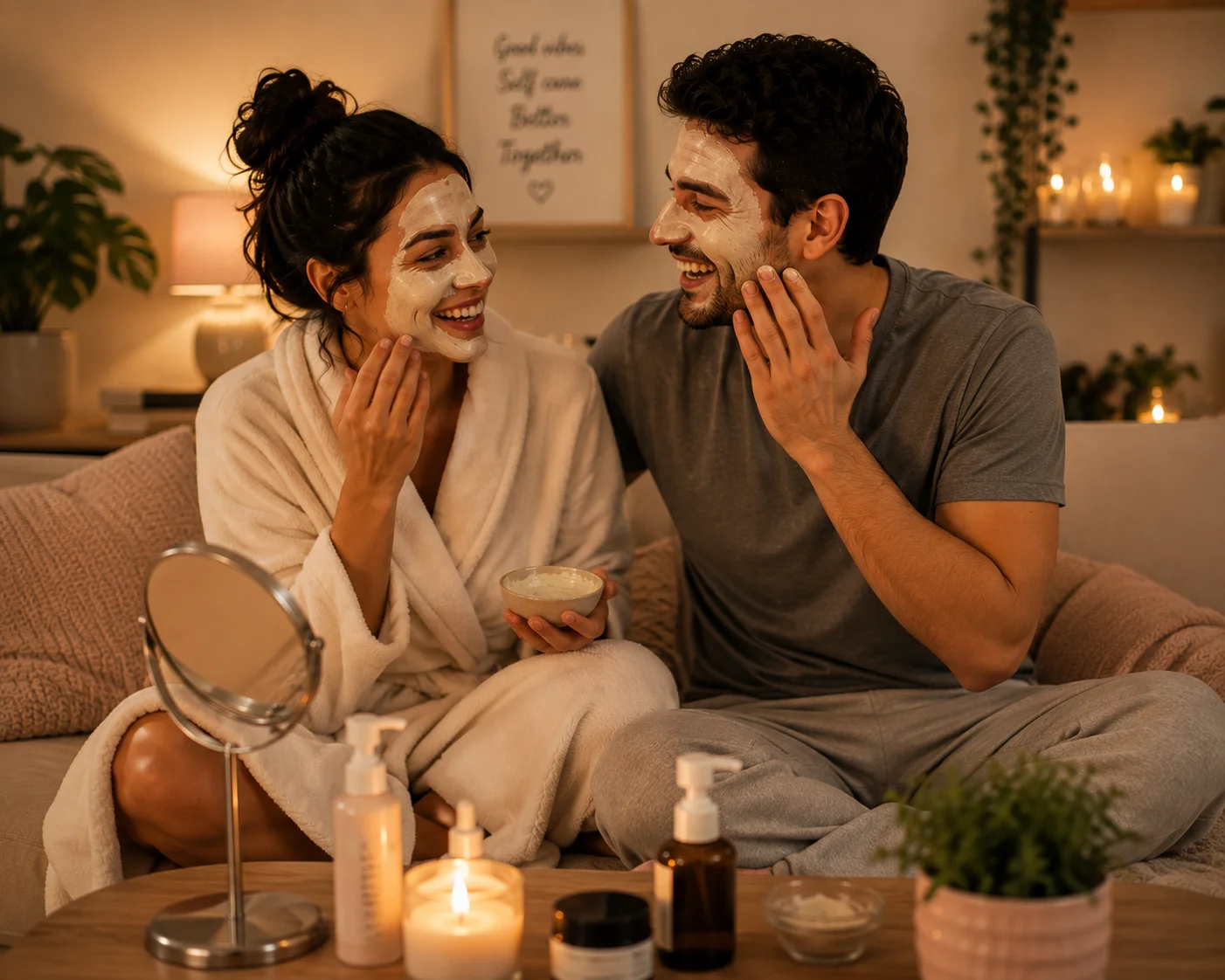
Run a home spa night
Face masks, low lighting, no phones. Costs almost nothing and works especially well after a stretch of long weeks where neither of you has slowed down.
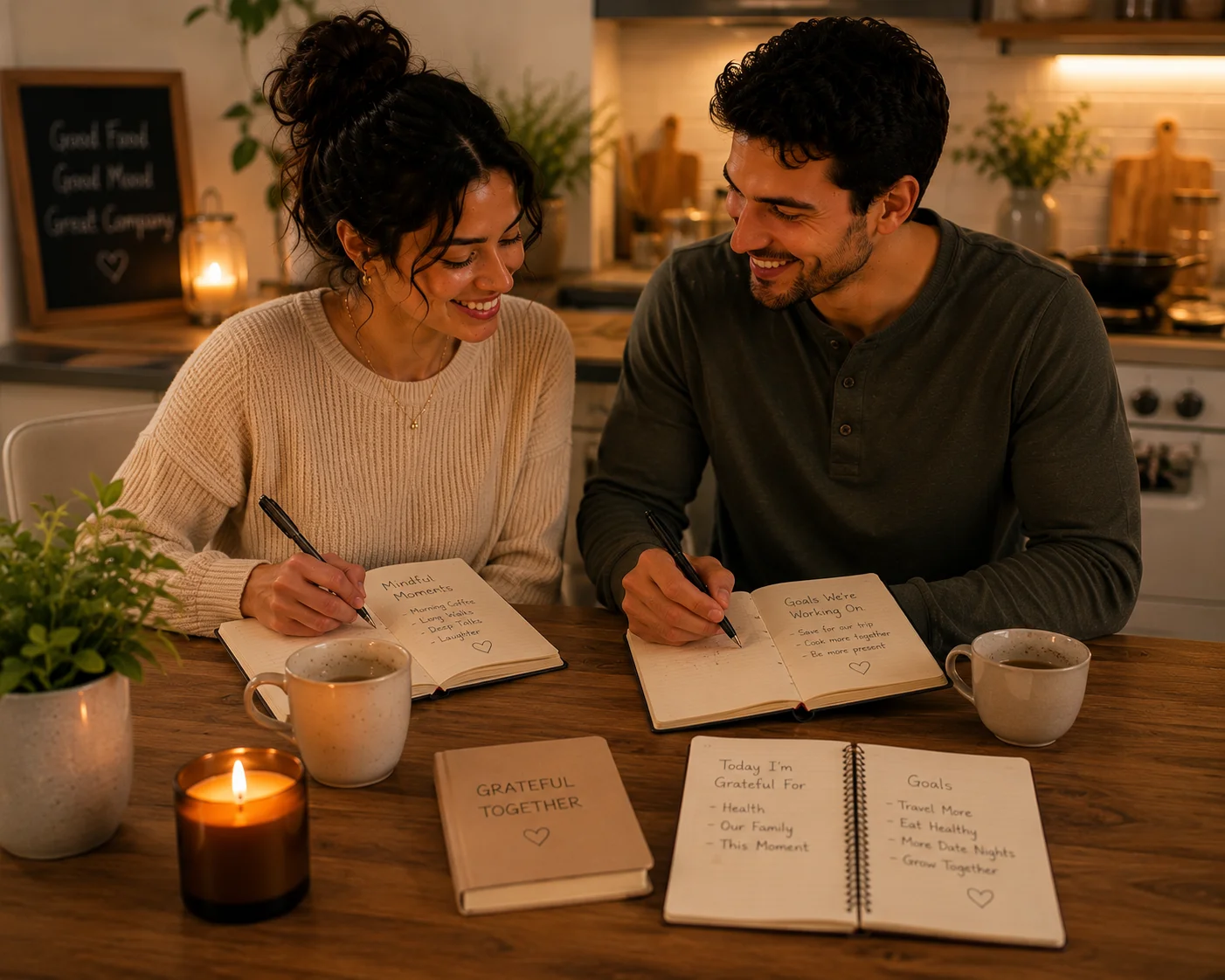
Journal in the same room
You don’t need to share what you wrote. Sitting quietly together while doing individual reflection is still a form of shared self-care — proximity without pressure to perform togetherness.
If conversation tends to stall during quieter moments like these, a light prompt can help without turning it into an interview. CoupleSuite’s Couple Question Generator has a deeper, slower category that works well for this kind of low-key evening rather than a high-energy game night.
Wellness Activities for Couples
Wellness, broadly, covers more ground than self-care — it’s the ongoing stuff that keeps both of you feeling okay, not just the occasional reset. A few activities that couples tend to keep up longer than they expect:
- A weekly walk with no destination and no phones, purely for talking
- Cooking dinner at home most nights — our guide to easy meals couples can cook together has realistic ideas — rather than defaulting to takeout
- A shared gratitude habit — one thing each, said out loud before bed
- Alternating who picks a “reset” activity each week, so it doesn’t fall on one person to plan every time
Wellness activities work best when they’re small enough to survive a bad week. A five-minute habit you actually keep beats an ambitious routine that quietly disappears by week three.
Couples Yoga: Ideas for Beginners
Couples yoga has a reputation for being either intimidatingly advanced or a little gimmicky, but at a beginner level, it’s really just stretching with a partner nearby — occasionally using each other for balance or gentle resistance.
Start with seated partner stretches
Sit back to back on the floor and lean gently against each other while breathing slowly for a minute or two. No flexibility required, and it’s a good way to physically settle down before bed.
Try a simple assisted forward fold
One partner sits with legs extended, the other gently helps guide a stretch forward. Communication matters more than flexibility here — you’re checking in constantly (“too much? good?”), which is its own small form of connection.
Follow a beginner video together, once a week
There’s no need to design your own routine. A short, beginner-labeled couples yoga video followed consistently once a week does more than an ambitious routine attempted once and abandoned.
Relaxing Activities for Couples
Not every wellness moment needs to be active. Some of the most effective relaxing activities for couples are close to doing nothing — which is exactly the point when the rest of the week has been full.
For the slow game night option, CoupleSuite’s Couple Card Games include gentler, conversation-based modes that suit a low-energy evening better than anything competitive.
Healthy Habits Couples Can Build Together
Habits stick better when they’re shared, mostly because there’s someone else quietly holding you to them. A few that tend to hold up over time:
- A consistent bedtime, even if you don’t fall asleep at the same time
- Cooking dinner at home most nights, with takeout kept as an occasional treat rather than a default
- A shared water bottle habit — silly, but visible reminders work better than good intentions alone
- A regular check-in on how you’re both actually doing, not just logistics
Habits are also one of the few areas where couples genuinely disagree on approach — one wants structure, the other wants flexibility. When that disagreement stalls things entirely, CoupleSuite’s Couple’s Decision Helper can help settle which version of a habit to actually commit to, instead of neither happening.
How Couples Can Exercise Together
Exercising together doesn’t require matching fitness levels or the same workout preferences. It requires picking something that accommodates the gap between you, rather than pretending it doesn’t exist.
Same activity, same pace
Walking, hiking, or cycling at a pace you can both sustain and talk through. Works well when fitness levels are fairly close.
Same activity, different intensity
Running side by side at your own paces, or a gym session where you work independently but arrive and leave together. Works better when one partner is noticeably fitter or more experienced.
If exercise turns into something you want to stick with long-term, it’s worth treating it the way you would any other couple hobby — built up gradually, not forced all at once.
A shared fitness goal — training for a short race, hitting a certain number of weekly walks — tends to hold up longer than “we should exercise more,” mostly because it gives you something specific to check in on.
Couples who move their bodies together regularly, even gently, tend to report feeling more in sync than those who exercise entirely separately.
A pattern often noted in relationship and wellness research
Creating a Relaxing Evening Routine as a Couple
Evenings are usually where wellness intentions quietly fall apart — the day’s over, energy’s low, and it’s easier to default to separate screens than anything shared. A simple evening routine fixes more of this than people expect.
Set a screen cutoff, even a loose one
Phones away thirty minutes before bed, replaced with actual conversation, reading, or just sitting together. The specific activity matters less than the fact that it’s not a screen.
Build in a short debrief
A few minutes each night to say how the day actually went — not just logistics, but the real version. It’s a small habit that keeps you from drifting into parallel lives without noticing.
End with something calming, not stimulating
Herbal tea instead of another episode, a short stretch instead of scrolling. The goal isn’t perfection — it’s giving the evening a soft landing instead of an abrupt one.
Couple wellness isn’t a separate project from the relationship itself — it’s the relationship, maintained on purpose. Small, repeatable habits beat ambitious ones you can’t keep up.
Starting Small With Couple Wellness
None of this needs to happen all at once. Pick one idea — a screen-free half hour before bed, a weekly walk, a single beginner yoga video — and give it a few weeks before adding anything else. Couple wellness and self-care tend to fail when they’re treated like a project with a finish line. They tend to work when they’re treated like small, ordinary habits you just keep choosing, night after night, long after the novelty of trying them has worn off.