
Best Activities to Do While Traveling as a Couple
There’s a particular moment early in a trip — bags still not fully unpacked, map open on a phone, neither of you quite sure which direction the good coffee is in — where a destination stops being an idea and starts being a place you’re actually standing in together. What you do with that first stretch of time, and the days that follow, tends to matter more than which country you’re in.
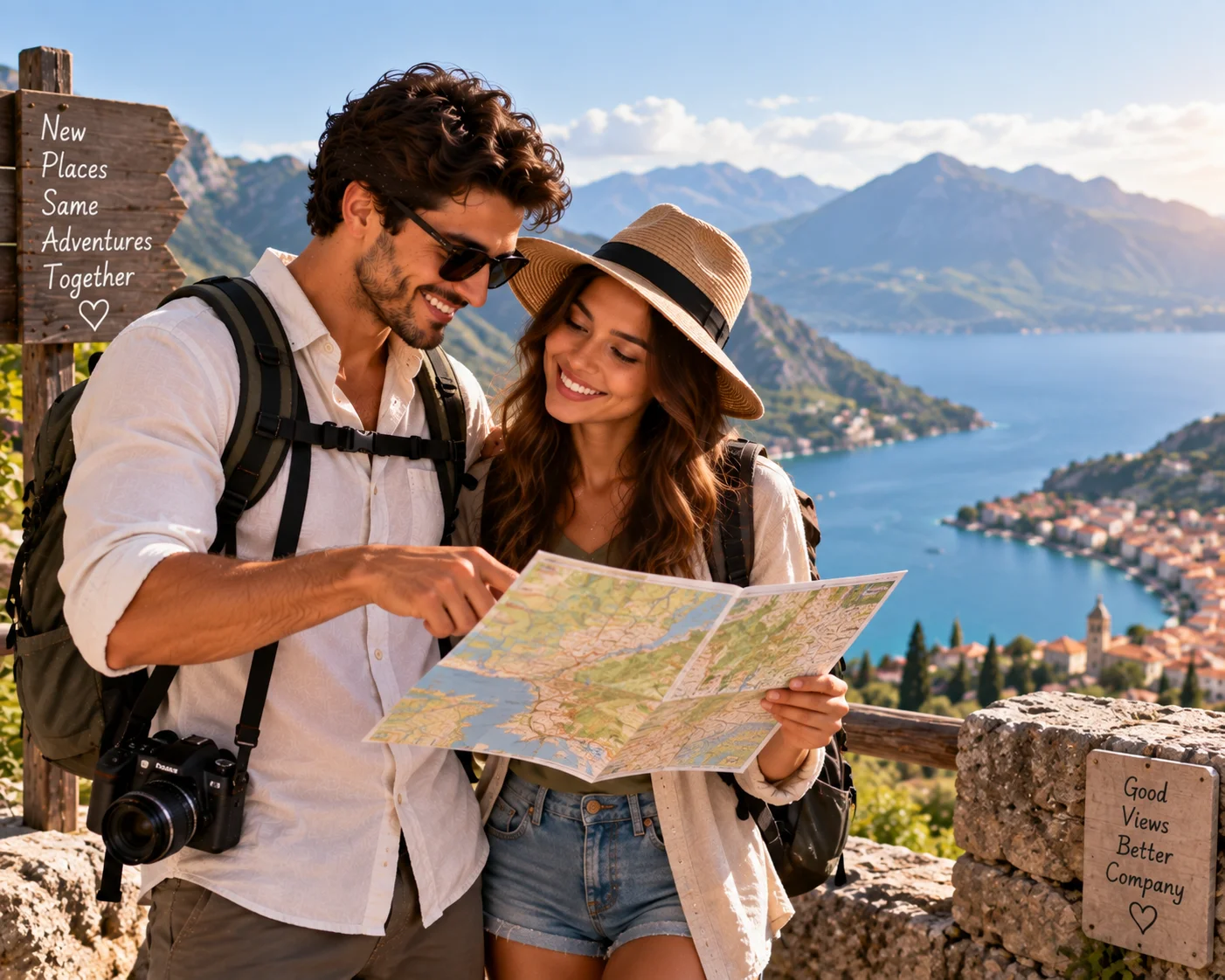 The best travel activities aren’t always the ones on the list — sometimes they’re the ones you stumble into.
Let the First Day Be Unstructured
It’s tempting to hit the ground running with a packed itinerary, but the first day of a trip often works better as a loose one. Wander without a fixed plan, follow whichever street looks interesting, stop when something catches your eye. Jet lag and unfamiliar surroundings make this the wrong day for precision anyway — better to save the ambitious itinerary for day two, once you’ve both gotten a feel for the place.
This kind of aimless exploring also tends to produce the small, specific memories that outlast the planned attractions — the bakery you found by accident, the street musician who was actually good, the wrong turn that led somewhere better than where you meant to go.
Food as the Main Event, Not the Side Note
Meals abroad rarely need to be treated as fuel stops between activities. Some of the best travel experiences happen entirely around a table — a long lunch that runs two hours longer than planned, a food market where you graze from four different stalls instead of committing to one restaurant.
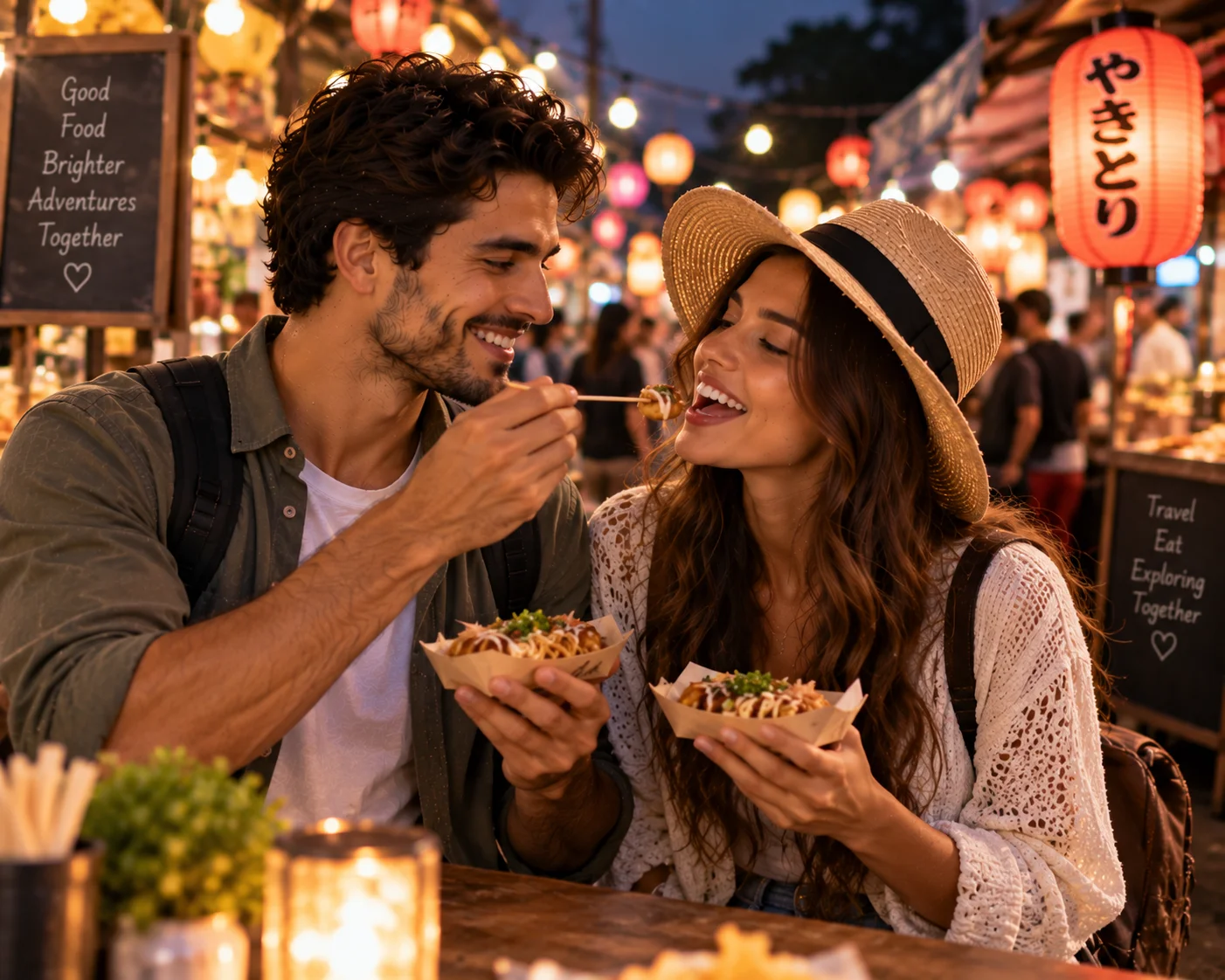
Eat at a night market
Split several small dishes instead of ordering one meal each — it turns dinner into a shared tasting session rather than two separate plates.

Take a local cooking class
Learning a regional dish together gives the trip a skill you both bring home, along with a story about whoever burned the garlic.
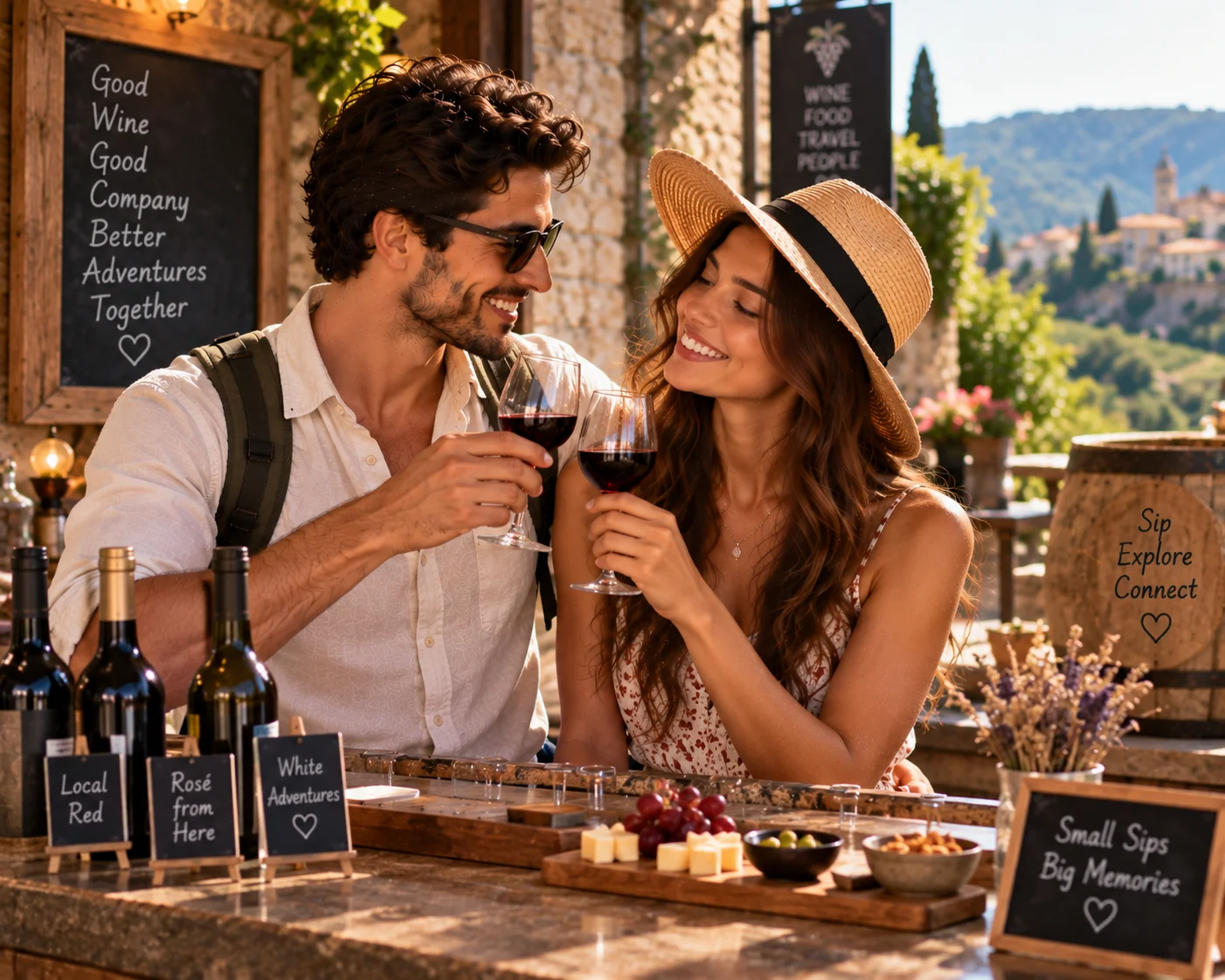
Do a small tasting
Wine, coffee, chocolate — whatever the region is known for. A short, focused tasting is a good way to slow down mid-trip without losing a whole afternoon.
Adventure or Ease — You Don’t Have to Pick Just One Trip to Have Both
Some travel days call for adrenaline. Others call for doing as little as physically possible. A good trip usually has room for both, even if one partner leans harder toward one side than the other.
The adventurous day
A hike to a viewpoint, snorkeling, renting bikes and getting mildly lost, a water sport neither of you has tried. Built-in teamwork, a little bit of nerve, and a good story either way it goes.
The do-nothing day
A slow morning, a long lunch, an afternoon with a book and no agenda. Just as valuable as the adventurous day, and often the one you remember as the most restorative part of the trip.
Alternating between the two — rather than trying to pack every day full — tends to keep both partners energized instead of one person quietly burning out on constant sightseeing.
Getting Lost, on Purpose
Set aside an hour with no destination and no map. Pick a direction and walk. This sounds almost too simple to count as a real activity, but couples who try it consistently name it among their favorite parts of a trip — mostly because it removes the pressure of “doing it right” and replaces it with genuine curiosity about wherever you end up.
Unplanned wandering tends to produce sharper, more specific memories than checklist sightseeing — you remember the alley, not just the landmark at the end of it.
A pattern often noted in travel psychology writing
Sunrise, Sunset, and the In-Between Hours
Watching a sunrise or sunset together doesn’t need a famous viewpoint to work. A rooftop, a hillside, even a hotel balcony can do the job. What matters is choosing to actually stop and watch it rather than letting it happen in the background while you’re doing something else.
Cultural Experiences Worth Slowing Down For
Museums and historic sites often get rushed through in an effort to “see everything,” which usually means remembering very little of it afterward. Picking two or three things to actually spend time with — rather than covering an entire museum in ninety minutes — tends to leave a much stronger impression.
- Choose one exhibit or wing and actually read the placards, rather than skimming past everything
- Sit in a historic square or courtyard for twenty minutes instead of walking straight through it
- Attend a local performance, festival, or religious or cultural ceremony if one happens to be happening while you’re there
- Visit a smaller, less crowded museum or gallery instead of only the famous one everyone recommends
The Long Drive, the Longer Story
Road trips deserve a mention on their own, since the driving itself becomes part of the activity rather than just a way to get somewhere. A good playlist, a rough route with two or three planned stops, and enough flexibility to pull over for something unplanned — a roadside stand, a strange sign, a view worth stopping for — often produces better memories than the destination at the end of the drive.
Photographing the Trip Without Making It a Job
Couple photography abroad has a way of becoming its own small source of friction — one person always behind the camera, the other always being asked to “just stand there for one more.” A looser approach usually works better: trade off who’s holding the phone, take a few photos and then put it away, and let at least one or two shots be genuinely unplanned rather than posed.
Some of the photos that end up mattering most years later aren’t the carefully composed ones — they’re the blurry, mid-laugh, slightly off-center shots that actually capture how the moment felt.
Spontaneous Additions Worth Making Room For
Leave a little slack in every itinerary for the things you didn’t plan — a street performance that stops you mid-walk, a shop that turns into a twenty-minute browse, a stranger’s restaurant recommendation that sounds better than your original plan. These rarely show up in guidebooks, and that’s usually exactly why they’re worth saying yes to.
A trip with zero flexibility built in tends to produce fewer stories worth telling later. Leave room for the plan to change.
Making the Logistics Easier So the Fun Stays the Focus
None of the above works particularly well if you’re spending half the trip arguing over what to do next or watching the budget spiral without noticing. CoupleSuite’s Date Planner is useful for shaping a specific day once you’re at a destination, weather check included, so an outdoor day doesn’t get derailed by rain you didn’t see coming. If you and your partner keep landing on two different ideas for how to spend an afternoon, the Couple’s Decision Helper settles it without either of you just giving in. And for longer trips with more moving parts — flights, accommodation, a running list of things to book — the Honeymoon Planner works well for keeping a full itinerary and budget in one place, honeymoon or not.
The best travel activities for couples aren’t necessarily the biggest ones. A slow lunch, an unplanned wrong turn, and a sunset you actually stopped to watch often outlast the expensive excursion you spent weeks planning.
What You’ll Actually Remember
Years from now, the details of a trip tend to blur — which museum, which restaurant, which exact beach. What tends to stay sharp is the feeling of exploring somewhere new next to the person you chose to explore it with. That’s really the best activity a couple can do while traveling: staying curious together, saying yes to the unplanned detour, and letting the place surprise you both a little.