
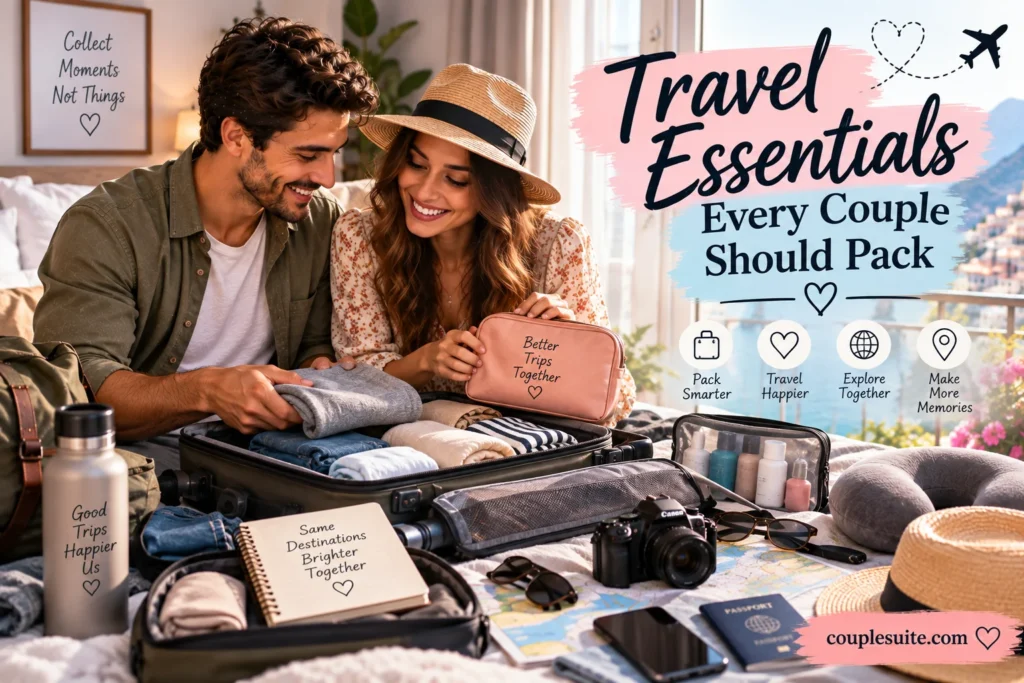
Travel Essentials Every Couple Should Pack
Packing for two people is a different exercise than packing for one — not because it’s twice the work, but because there’s suddenly a second opinion on what actually counts as essential. Getting the packing list right isn’t about bringing more. It’s about bringing the right things, dividing them sensibly, and not ending up with three phone chargers and zero sunscreen.
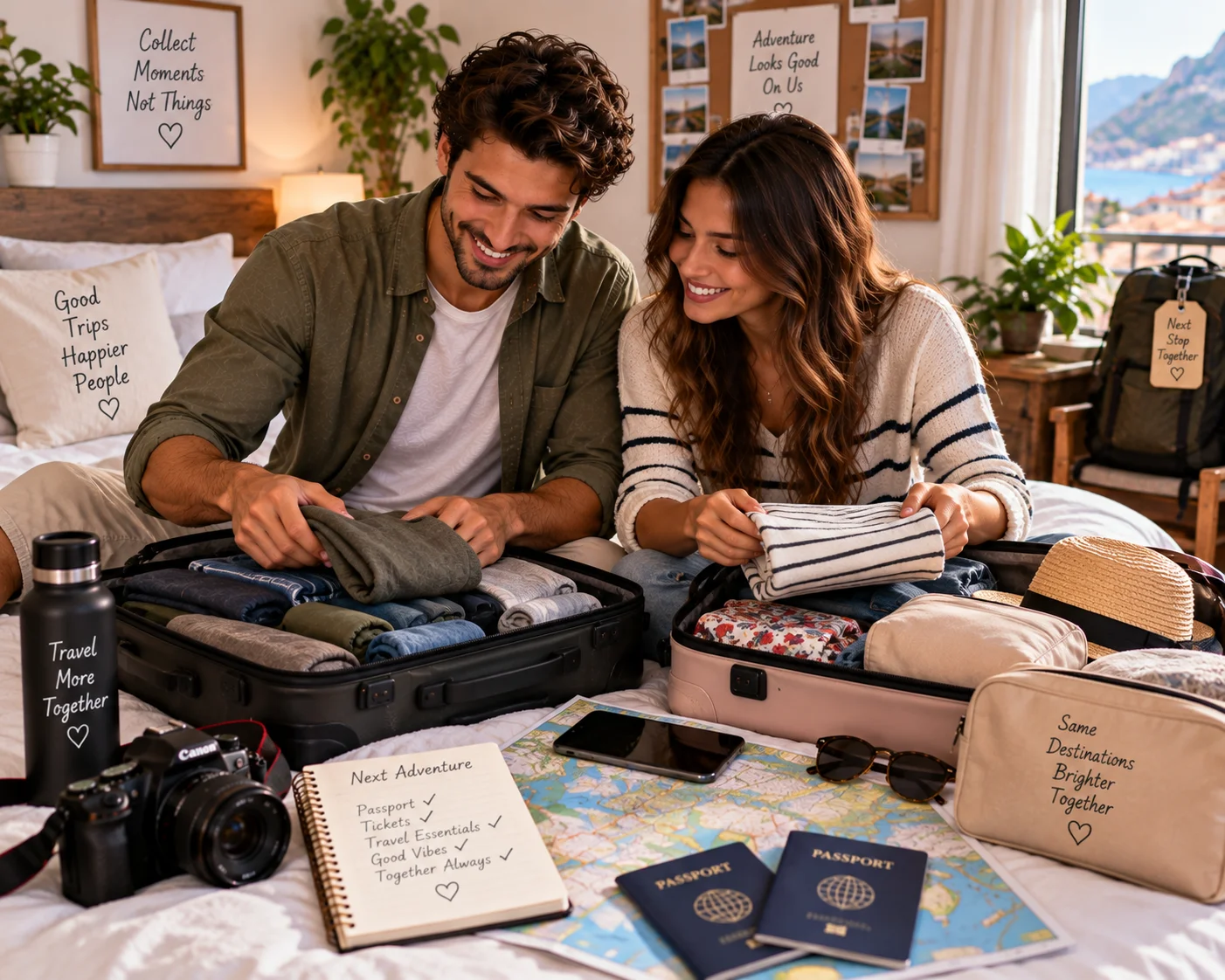 Good packing starts with a short conversation, not a last-minute scramble.
Most packing stress comes from doing it separately and assuming the other person has it covered. A few travel essentials genuinely matter for every trip, a few depend on the kind of vacation you’re taking, and a handful of small decisions — who’s carrying what, what’s shared versus personal — make the whole process noticeably smoother.
Documents and Essentials Neither of You Can Forget
These aren’t exciting to pack, but they’re the ones that actually end a trip if forgotten. Worth confirming out loud, together, rather than assuming the other person checked.
- Passports and IDs, checked for expiration dates well before the trip, not the night before
- Travel insurance details and confirmation numbers, saved both digitally and on paper
- Booking confirmations for flights, accommodation, and any pre-paid activities
- A backup payment method kept separate from your main card, in case one gets lost or blocked
- Any required visas or entry documents, confirmed for the specific destination
If your trip involves more moving pieces than usual — multiple destinations, a longer itinerary, several confirmation numbers to track — CoupleSuite’s Honeymoon Planner includes a checklist feature that works for any longer couple’s trip, not just honeymoons, and helps keep all of this in one place instead of scattered across email confirmations.
Deciding Who Packs What
One of the most avoidable sources of packing friction is duplication — both of you bringing a full first-aid kit, or neither of you bringing one at all because you each assumed the other had it. A quick division of labor solves this before it becomes a problem.
Shared items
First-aid basics, a portable charger, snacks, any shared electronics like a camera. Pack once, split the weight between bags.
Personal items
Clothing, toiletries, personal medication, individual electronics. No need to coordinate — just don’t forget them.
A five-minute conversation before packing — “I’ll bring the first-aid kit, you bring the charger” — prevents most of the overlap and gaps that show up when both people pack in separate rooms without checking in.
The goal isn’t a perfectly even split of every item. It’s making sure nothing important falls into the gap between “I thought you had it” and “I thought you did.”
Tech and Charging Essentials
Modern travel runs on devices that all need power, and running out of battery mid-trip is a small but avoidable annoyance worth planning around.
If capturing the trip matters to you both, it’s worth deciding in advance who’s the primary photographer for the day, or agreeing to trade off — it avoids the slightly annoying dynamic of one partner always behind the camera and rarely in the photos.
Comfort Items Worth the Extra Space
Not everything in a suitcase needs to be strictly functional. A few comfort items make a noticeable difference to how a trip actually feels, especially on longer travel days.
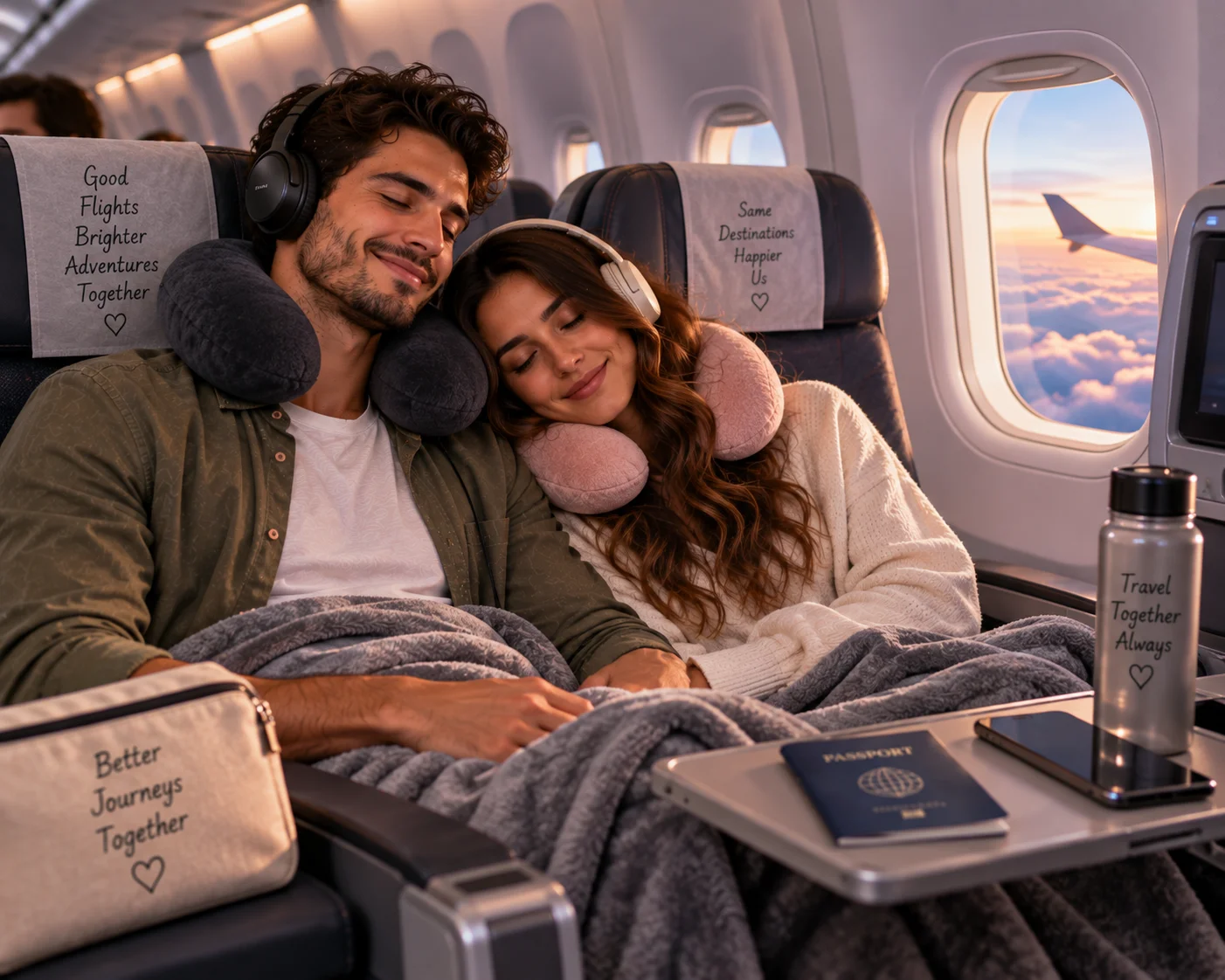
Travel pillow and headphones
Small items that make a long flight noticeably more bearable, especially on red-eyes or long layovers.

A book or offline game
For the inevitable slow afternoon, a delayed flight, or an evening with nothing planned.

A basic health kit
Sunscreen, pain relief, motion sickness tablets, any regular medication — small, easy to forget, hard to replace abroad.
Packing for Different Types of Trips
What actually belongs in the suitcase shifts a lot depending on the kind of trip. A beach vacation and a mountain getaway share almost nothing on their packing lists beyond the essentials above.
Beach and warm-weather trips
Lightweight clothing, swimwear, a reusable water bottle, and stronger sunscreen than you think you’ll need. Insect repellent is easy to forget and hard to find in a rush once you’re already somewhere humid.
Mountain and cold-weather trips
Layers matter more than any single heavy item — a base layer, an insulating layer, and something waterproof on top covers most conditions. Good footwear is worth prioritizing over almost anything else on a mountain trip.
City breaks
Comfortable walking shoes above all else, a day bag for wandering, and one slightly nicer outfit each in case a restaurant or evening plan calls for it.
Avoiding the Most Common Packing Disagreements
Packing disagreements are rarely about the items themselves — they’re usually about differing instincts on how much to bring or how early to start. Recognizing this pattern helps more than any specific packing list.
- Start the conversation a few days early rather than the night before departure
- Agree on luggage limits together, especially for trips involving budget flights with strict weight allowances
- If one partner tends to overpack and the other underpacks, meet in the middle rather than one person constantly compromising
- Do a final joint check the morning of departure — documents, chargers, medication — as a last safety net
When you genuinely can’t agree on how much luggage to bring, or whether a specific item makes the cut, CoupleSuite’s Couple’s Decision Helper is a quick, low-stakes way to settle it without one person just giving in for the sake of moving on.
Most packing regrets aren’t about what got left behind — they’re about the argument that happened while deciding what to bring.
A pattern commonly noted in couple travel advice
Travel essentials for couples are less about a perfect packing list and more about a quick conversation beforehand — who’s bringing what, how much you’re both comfortable carrying, and what actually matters for this specific trip.
Packing With Less Stress Next Time
A good packing process isn’t about getting every single item right — it’s about avoiding the last-minute scramble and the small arguments that come with it. Start the conversation early, split the shared items, and let the specific trip dictate the rest. Once you’ve got a system that works, packing for your next trip together gets a little easier every time.