
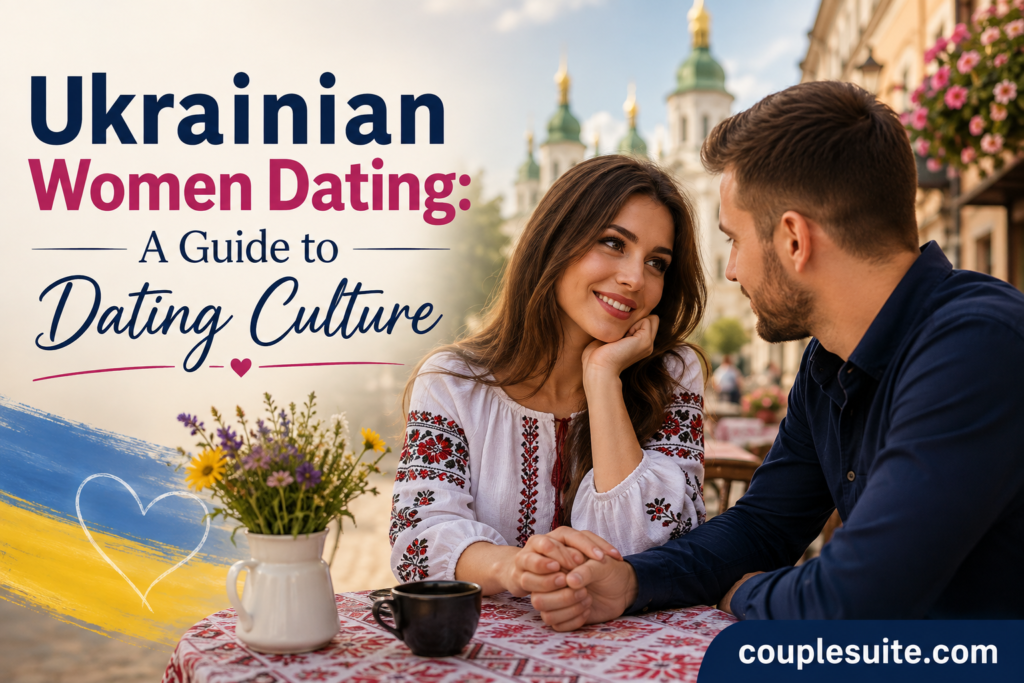
“Different” is a slippery word, so let me pin it down before we start. A woman from Lviv and a woman from Odesa can disagree about almost everything, from politics to how loud a wedding should be. What they do share is a set of unwritten dating rules absorbed from childhood — rules about who calls first, what a bouquet means, when parents get involved. That’s the difference worth learning. And since most people meet online now, long before anyone books a flight, pages built around Ukraine women dating tend to be the first stop for anyone curious. Fine as a starting point. Terrible as an education. So here’s the culture part.
Courtship moves on a slower clock
American dating has a stage where you’re seeing three people and nobody’s offended. That stage barely exists in Ukraine.
Meeting someone usually means a sequence — coffee, then dinner, then a walk that lasts four hours because neither of you wants to go home. Somewhere around date three or four, exclusivity is simply assumed. Nobody schedules the talk. Bringing it up formally can read as strange, like you’re negotiating a contract instead of just being with a person.
The flip side: things get serious faster once they start. Six months in, you’ll likely be asked where this goes. Not as pressure exactly. More like a reasonable question that Americans have learned to dodge and Ukrainians haven’t.
Texting also works differently. Long voice messages, calls at odd hours, actual conversation rather than three-word volleys. If you’re a “hey” and “wyd” texter, you’ll come across as bored.
Family is in the room from day one
You will meet the mother early. Possibly the grandmother, who will feed you until you’re in physical distress and then ask why you’re not eating.
This isn’t a test of your commitment in the American sense, where meeting parents is a milestone unlocked after months. Families are woven into weekly life — Sunday meals, name days, birthdays that involve twelve relatives and a table that can’t hold the food. Introducing you is practical. She wants to see how you handle it.
Family opinion carries weight. Real weight. Not veto power, and plenty of Ukrainian women have married men their mothers grumbled about for years. Still, if her father decides you’re unserious, you’ll feel that decision at every dinner for the next decade. Show up on time. Bring something. Ask the grandmother about her garden and then actually listen to the answer, all nine minutes of it.
The etiquette rules nobody writes down
Flowers, and the odd-number rule
Buy an odd number. Three, five, seven, eleven. Even-numbered bouquets go to funerals, and handing someone twelve roses is a genuine gaffe — the kind people retell at parties.
Yellow flowers have a reputation for meaning separation. Half the country thinks it’s nonsense, half won’t risk it. Buy red, white, pink, anything else.
Who pays, who opens the door
He pays. On the early dates, at least, and often after. He carries the bags, holds the door, walks on the street side of the sidewalk. These gestures aren’t statements about who earns more — she probably earns plenty — they’re just manners, the way saying “bless you” is manners.
Where men get it wrong is overcorrecting in either direction. Refusing to let her split anything ever, forever, starts to feel like ownership. Suggesting you go halves on the first dinner reads as cheap. Pay early, relax about it later, take the cue from her.
Small superstitions worth knowing
Don’t shake hands across a doorway. Don’t whistle indoors, unless you want to hear about money flying out of the house. Before a long trip, everyone sits down in silence for a moment — sit down with them. Empty bottles go under the table, not on it.
Do you have to believe any of this? No. Do it anyway. It costs nothing and it signals that you’re paying attention.
Direct talk, and almost no small talk
Ask a Ukrainian woman how she’s doing and you may get a real answer. Her back hurts, work was miserable, her cousin is being an idiot again. The American reflex — “good, you?” — sounds evasive here, maybe even a little cold.
Compliments land differently too. Vague flattery gets a raised eyebrow. Specific observations work: you noticed she rearranged the shelf, you remembered the name of her professor. Overpraise reads as strategy.
Humour skews dark and dry. Jokes about disaster, bureaucracy, the neighbours’ renovation. If she teases you hard, that’s warmth, not hostility. Getting wounded by it kills the rhythm fast.
Then there’s language. Many are bilingual, many switched to speaking Ukrainian full-time after 2022, and that switch is often identity, not convenience. Don’t quiz her about it. Learn ten words — дякую, будь ласка, доброго ранку — and mangle them cheerfully. Effort beats accuracy.
Effort with appearance, and what it doesn’t mean
Yes, the grooming standard is high. Manicures, hair, an outfit assembled on purpose to go buy bread. Visitors notice within an hour of landing.
Where they go wrong is the interpretation. This is a social norm, not a signal aimed at you. Women dress for the street, for colleagues, for their own mothers, for a culture where showing up unkempt reads as not coping. Her friends dress the same way. Her aunt dresses the same way.
Treating presentation as flirtation is the fastest way to look foolish. She got dressed. That’s it.
Educated, employed, and unimpressed by wallets
Ukrainian women are among the most educated in Europe by university enrolment, and the two-income household has been standard for generations — under the Soviet system women worked, full stop, and nothing since has reversed it. Engineers, accountants, IT project managers, doctors on brutal salaries.
So the “she wants a provider” script misfires. Traditional gestures and financial independence live together comfortably here. She’ll let you pay for dinner and then go close a deal on Monday that you couldn’t. Leading with money — photos of the car, mentions of your salary — attracts exactly the kind of attention you don’t want and repels everyone else.
What the war changed about dating
Long distance is now the default rather than the exception. Millions of women are in Poland, Germany, Czechia, sometimes with children, sometimes temporarily, sometimes not. Others stayed and live with air raid alerts and blackouts as a daily fact.
Practically: calls get cut off, and it’s the power grid, not disinterest. Schedules shift. Plans stay loose because plans have to stay loose.
Emotionally, tread carefully. Almost everyone has lost someone or has a brother, father, or friend serving. She may want to talk about it. She may want two hours of stupid conversation about anything else. Follow her lead, never push, and skip the geopolitical opinions you formed on Twitter.
One more thing worth naming — people make decisions faster now. Waiting five years to see how it goes feels absurd to someone who’s watched how quickly ordinary life can end.
Stereotypes worth dropping before your first message
“They’re submissive.” Spend one afternoon watching a Ukrainian woman handle a rude cashier and retire this idea permanently. Traditional manners, strong opinions, zero hesitation about voicing them.
“She just wants a visa.” Some scammers exist, on every platform, in every country. Most women you’ll talk to have jobs, apartments, families they don’t want to leave, and would rather you visit than marry them into an immigration queue.
“They’re all the same.” Tens of millions of people. Village grandmothers and Kyiv startup founders. Devout and atheist. The generalisation collapses the second you meet two of them.
“Young women want much older men.” A twenty-two-year-old messaging a fifty-eight-year-old should raise your suspicion, not your hopes.
Regional differences are real
Lviv and the west
More Ukrainian-speaking, Greek Catholic influence, coffee culture that borders on religion. Courtship here tends to be slower and more formal, family involvement heavier.
Kyiv
International, fast, career-first. English is common, dating apps are normal, and the pace resembles any major European capital. Also the most competitive scene by a wide margin.
Odesa and the south
Blunt, funny, loud in the best way. Port-city temperament — jokes land faster, sincerity is tested harder, and sentimentality gets punctured on sight.
How to actually date well here
- Be on time. She will be twenty minutes late. You will not.
- Bring small gifts — flowers, chocolate, something from your country. Not expensive. Just thought about.
- Ask about her work and mean it. It’s usually more interesting than yours.
- Avoid politics as a conversation opener, and never explain her own country to her.
- Learn the names of her friends before you meet them. You’ll meet them early, and they’re the real gatekeepers.
- Video call before flying. Anyone dodging a live camera is dodging for a reason.
- Don’t discuss marriage in the first month and don’t pretend you’re not thinking about it in the sixth.
- Eat what the grandmother gives you. All of it.